AHEAD | Tribal Nations Program
Improving Homes, Strengthening Tribal Communities
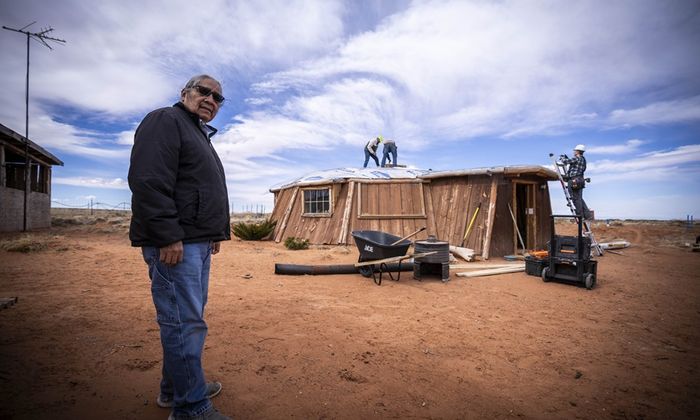
Nonprofit Red Feather Development Group awarded grants in partnership with Clearinghouse CDFI to improve housing in tribal communities.

Santa Monica Vermont Apartments Help Residents Access Support Services and Transit in East Hollywood
Member: Bank of America
Sponsor: Little Tokyo Service Center
Award: $1 million AHP Grant
Santa Monica Vermont Apartments
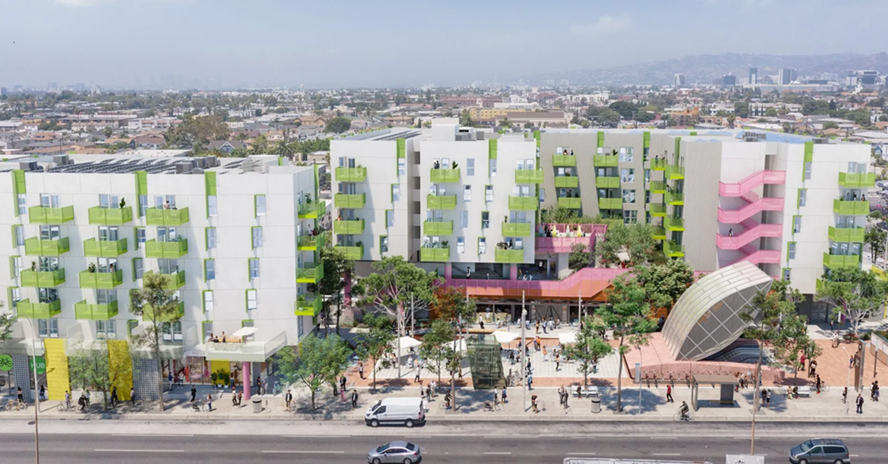
At the intersection of Vermont Avenue and Santa Monica Boulevard in East Hollywood, Santa Monica Vermont (SMV) Apartments is redefining what mixed-use affordable housing can look like when it is intentionally connected to transit, support services, and community needs.
Developed by Little Tokyo Service Center (LTSC), a social service and community development organization in Los Angeles, the mixed‑use property includes 187 apartments—100% affordable, with a significant portion dedicated to permanent supportive housing for individuals and families who have experienced homelessness. The development received a $1 million Affordable Housing Program (AHP) grant from the Federal Home Loan Bank of San Francisco in partnership with Bank of America, helping make the affordable housing development financially feasible in one of the most expensive housing markets in the country.
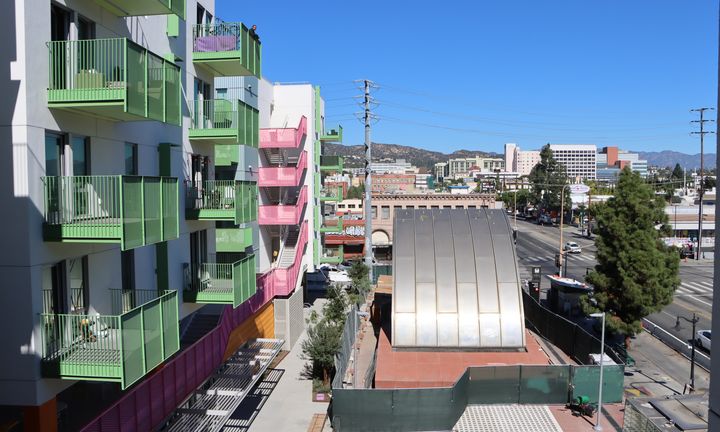
Located directly above the LA Metro’s Vermont/Santa Monica Station, the SMV Apartments places residents within steps of frequent, reliable public transportation, reducing household transportation costs while improving access to jobs, health care and everyday necessities. Research has increasingly shown that transit‑connected affordable housing helps stabilize households by lowering combined housing‑and‑transportation expenses, particularly for residents without vehicles.
A Sustainable Building Designed for Low-Cost and Long‑Term Impact
SMV Apartments was designed with sustainability in mind, from energy‑efficient systems to water‑conscious landscaping.
“We are a 187‑unit apartment building. This is a 100% affordable and permanent supportive housing development,” said Debbie Chen, Director of Real Estate Development at Little Tokyo Service Center. “We have solar panels and solar thermal, highly energy‑efficient fixtures within the property, low‑flow fixtures, and native plantings that require less water. There are so many pieces of this building—from the bottom up—that come together to make this a highly environmentally sustainable and energy‑efficient building.”
Those design choices help lower operating costs while supporting long‑term affordability—an important consideration in a neighborhood facing growing development pressures.
“Housing Plus Plus”
The development was also shaped by extensive community input and is designed to serve not just residents, but the surrounding neighborhood.
“This site is housing plus plus,” said Chen. “We have a local grocery store moving in with a Filipino hot food buffet. We have a farmers market that will be activating the Metro plaza through collaboration with the Thai Community Development Center. And we have a federally qualified health center on the ground floor.”
That mix of housing, retail, healthcare and public space reflects LTSC’s broader mission.
“We do what is needed in these neighborhoods—and that’s a core tenet of our mission,” the representative said. “We heard loud and clear from local nonprofits and neighborhood councils that we needed all‑affordable housing and permanent supportive housing to help hold on to affordability in this community.”
A New Beginning for Residents
For residents, SMV Apartments represents more than a new address—it offers stability, dignity and opportunity.
One resident, who previously experienced homelessness, said their situation was largely a matter of circumstance.
“I had a good life all my life. I worked all my life. So becoming homeless was something that took me by surprise,” said Johnny, a new resident at SMV Apartments. “It could happen to anyone. It happened to me.”
After living out of a car, the move into permanent housing brought both relief and wonder.
“When they first showed it to me—even before everything was done—I couldn’t believe it,” the resident said. “I said, ‘Are you sure this is mine?’ I was really happy.”
Transit access has played a key role in restoring residents’ independence.
“Having our Metro system below us makes a big difference, especially when you don’t have a car,” the resident said. “I learned to get around. I go everywhere—the beach, for a walk, just for health. As much as I love coming home, the Metro lets me live my life.”

Johnny, a resident at SMV Apartments
Connecting Housing and Mobility
SMV Apartments reflects a broader shift toward integrating affordable housing with public transit, a strategy increasingly viewed as essential for addressing housing affordability and homelessness in high‑cost regions.
By combining affordable homes, supportive services and direct access to transit in one location, the development helps residents reduce costs, stay connected and build stability—while contributing to a more equitable and sustainable community in East Hollywood.
SMV Apartments is one of many affordable housing communities across Arizona, California, and Nevada supported by FHLBank San Francisco’s Affordable Housing Program. Each year, the Bank awards tens of millions of dollars in grants delivered to member financial institutions and their nonprofit and community partners, helping to make projects like this possible.


